Flight training in North Myrtle Beach, first lesson to CFI.
Blue Horizon Aviation is a family-owned Part 61 flight school based at Grand Strand Airport (KCRE) in North Myrtle Beach, South Carolina. It flies a seven-aircraft fleet of Cirrus SR-series airplanes and Cessna 172s, operates seven days a week, and is the only CSIP-certified Cirrus instruction in the Myrtle Beach area.
- Home field
- KCRE · Grand Strand Airport
- Aircraft
- 7 aircraft
- Instructors
- 1
- Programs
- Six
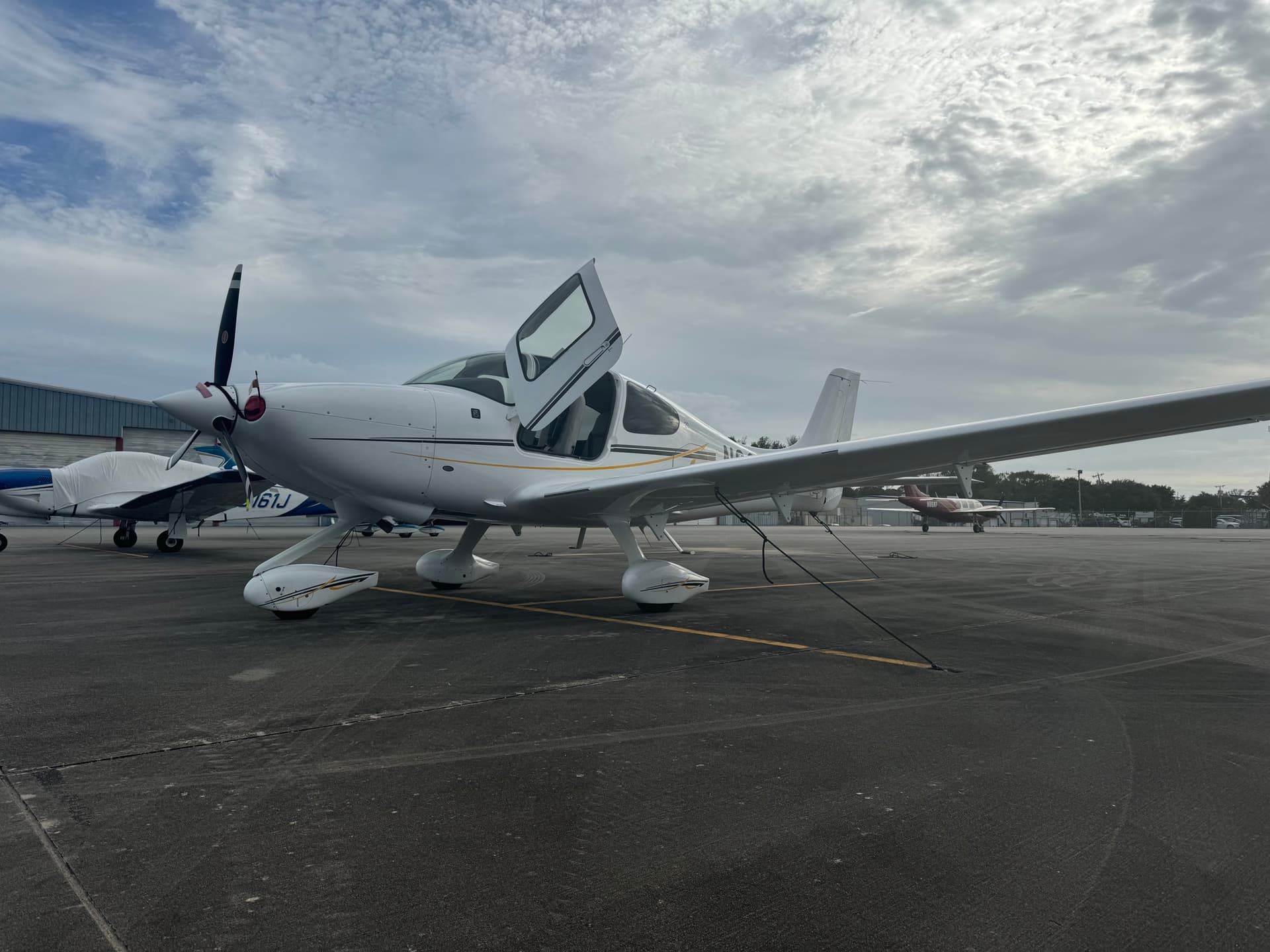 BHA · on the ramp at Grand Strand Airport
 Six programs, one standard.
The FAA sequence runs Private, then Instrument, then Commercial, then CFI.
01 Private Pilot License Become a licensed pilot — able to carry passengers and fly on your own terms. This is where almost everyone at Blue Horizon begins.
You must be at least 17 to hold the certificate and able to speak, read and write English. No prior experience is needed.
The FAA minimum is 40 hours of logged flight time plus a written exam and a checkride. We recommend two lessons a week — flying consistently is the single biggest thing that shortens the path.
Start with a Discovery Flight. You fly the airplane, and we write out an estimate for the rest of the certificate before you commit to anything.
02 Instrument Rating (IFR) Master the skies and fly with confidence in any weather — the rating that turns a fair-weather license into a usable one.
You learn to fly and navigate by instruments alone: approaches, holds, the air traffic control system, and the judgment to know when not to go.
A large part of instrument work happens in our simulator, where we can put you in weather and failures that would be unwise, or simply unavailable, in the airplane — at a fraction of the cost of aircraft time.
Our SR20s carry Perspective+ and Avidyne glass and the 172s are IFR-certified, so you can train on the panel you intend to fly behind.
03 Commercial Pilot License (CPL) Get paid to fly — for airlines, charter operators, and anyone else who needs a professional pilot.
The Commercial certificate raises the standard on everything you already do: tighter tolerances, precision maneuvers, and the professional judgment that goes with flying for hire.
Between the Cirrus SR-series and three Cessna 172s, the hours you need can be built here rather than somewhere else.
From Commercial, most students carry straight on to CFI and CFII and start teaching — which is how the majority of career pilots build the hours to the airlines.
04 Flight Instructor (CFI/CFII) Teach, build flight hours, and advance your career — then add the instrument instructor rating and teach that too.
The CFI is the certificate that turns flying into a job: you learn to teach from the right seat, and you learn your own flying twice as well in the process.
The CFII lets you train instrument students, which is where a large share of an instructor’s hours actually come from.
Both are trained here at KCRE, seven days a week, so the certificate that turns flying into a job is one you can earn without leaving the airport you learned at.
Alongside every rating
Cirrus Transition & Glass Cockpit
Get standardized and proficient on the Cirrus SR-series, and fluent on the glass panel in front of you.
We hold the only CSIP-certified Cirrus instruction in the Myrtle Beach area, so transition training here follows the manufacturer’s standardized syllabus rather than a local interpretation of it.
That covers the SR-series systems, CAPS decision-making, and the Perspective+ and Avidyne panels — end-to-end glass cockpit operation, not just where the buttons are.
It suits an owner moving into a Cirrus, a renter checking out, and any pilot who wants to fly the SR20 or SR22 properly rather than adequately.
Endorsements & Add-ons
Tailwheel, high-performance and spin training — plus simulator time, which is the cheapest way to sharpen anything.
Tailwheel and high-performance endorsements, and spin training for anyone heading toward the CFI or who simply wants to understand what the airplane does at the edge.
Simulator sessions let us fly weather, failures and instrument approaches on demand, day or night, at a fraction of the cost of aircraft time — useful whether you are a student or a rated pilot staying current.
Ask an instructor which of these fits where you are: an endorsement is usually a few hours of focused work rather than a course, and it is worth knowing which one actually moves you forward.
Training built around you
Blue Horizon quotes your training rather than advertising a headline figure — how often you fly is the biggest thing that moves the number, and the simulator is there to keep it down.
Brief
A real pre-flight brief: what you’ll fly today, and why.
Fly
Your time in the air over the Grand Strand.
Debrief
What happened, what went well, and what the next lesson sets up.
Standardized Cirrus training. CSIP-certified instruction on the SR-series — the same procedures, briefings and standards on every flight, not one instructor’s personal method.
Do I need any previous experience to start?
No — none at all. You need to be at least 17 to hold a Private Pilot certificate and able to speak, read and write English; that is the whole list. Most of our students start with a $99 Discovery Flight having never touched an airplane.
Is it safe?
Yes. Every training flight has a Certified Flight Instructor beside you with a full second set of controls, and our four Cirrus SR-series aircraft are fitted with CAPS — the whole-airframe parachute system that can bring the entire airplane down under canopy. We also fly the simulator hard so that weather and emergencies are things you have already handled before they ever happen in the air, and we do not launch into weather that is not right for the lesson.
How long does it take to get my license?
The FAA minimum is 40 hours of logged flight time, plus a written exam and a checkride. We recommend two lessons a week, which is the pace that keeps you moving forward rather than re-learning last month’s lesson. We are open seven days a week, so the schedule bends around your week rather than the other way round.
Do I need a medical certificate?
Yes, before you fly solo. A Private Pilot needs at least an FAA third-class medical certificate, issued by an Aviation Medical Examiner. You do not need it for a Discovery Flight or your first lessons, but it is worth starting early — tell your instructor and we will point you at an AME.
What aircraft will I train in?
One of seven: three IFR-certified Cessna 172s, three Cirrus SR20s, and a 315-horsepower Cirrus SR22 G6. Most students start in the 172 and move to the Cirrus; some do the whole certificate in the SR20. Your instructor will help you pick based on what you want to fly afterwards and what you want to spend.
Are you a Part 61 or Part 141 school?
Part 61. That means your training is built around you rather than a fixed FAA-approved course syllabus — we can move faster where you are strong, spend longer where you are not, and fit lessons around a job or a family. The certificate you end up with is exactly the same one.
Can flight training be a career?
Yes, and we train the whole path here. Private, then Instrument, then Commercial, then CFI and CFII — at which point you can instruct, get paid to fly, and build the hours the airlines and charter operators want. Because every rating is taught at KCRE, you never have to change schools to take the next step.
How do I get started?
Send us your name and number, or call (854) 600-4453 — an instructor will get back to you, and five minutes on the phone is usually enough to know whether this is for you. The first thing almost everyone does is book a Discovery Flight.
Will I train in the same airplane every lesson?
Usually the same type, and often the same airplane. Consistency early on is worth a lot, so we keep you on one airframe while you are learning the basics. Later it is an advantage to move around — a pilot who has flown a Perspective+ SR20, an Avidyne SR20 and a steam-and-VOR 172 reads instruments rather than memorizing one panel.
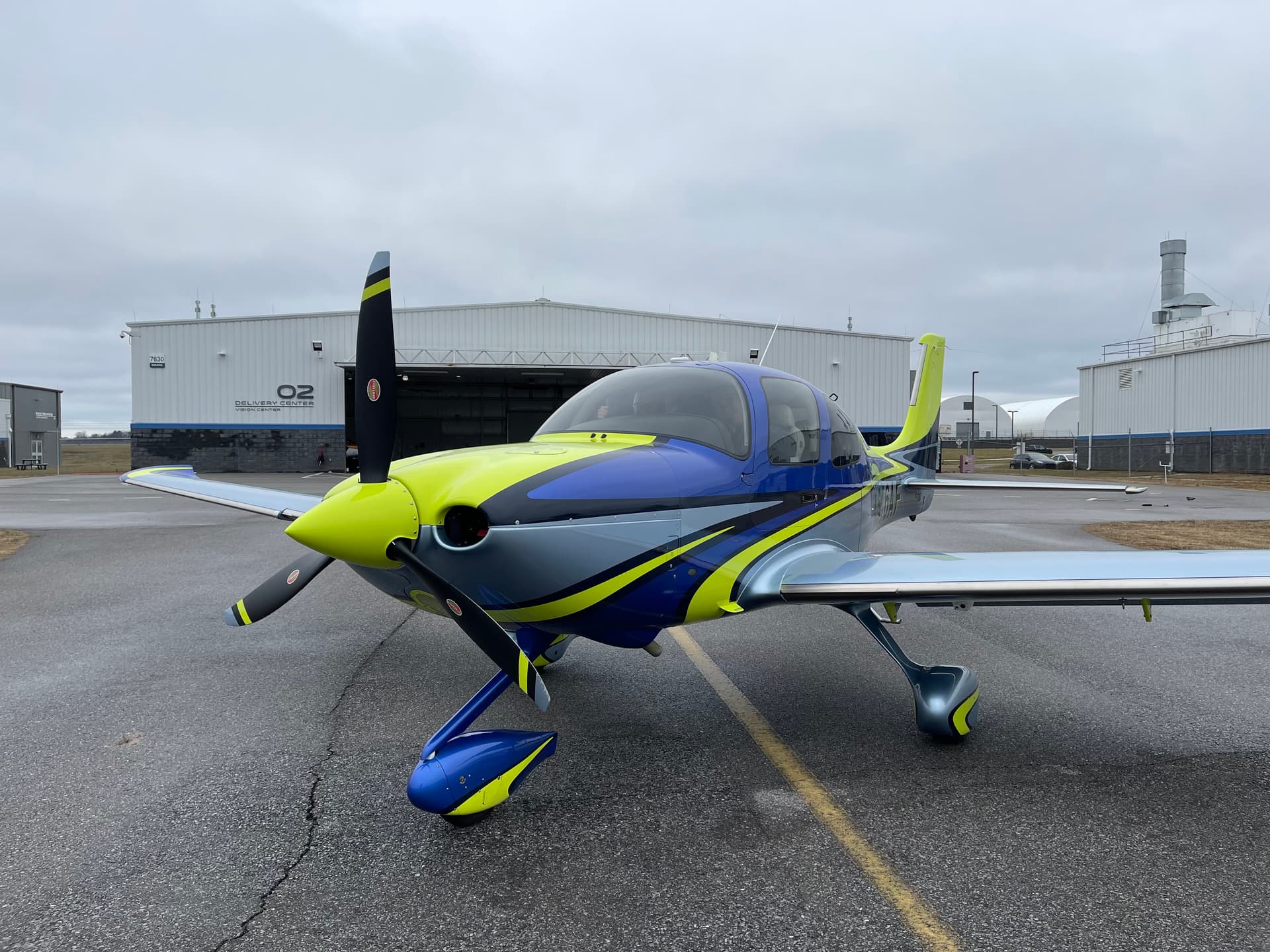 BHA · on the ramp at Grand Strand Airport
 Not sure where to start?
Call us and we'll talk it through — where you are, where you want to go, and what it takes to get there, numbers included.
Serving Myrtle Beach · Little River · Conway